NVIDIA's 64GB DGX Spark at $4,999: what it runs
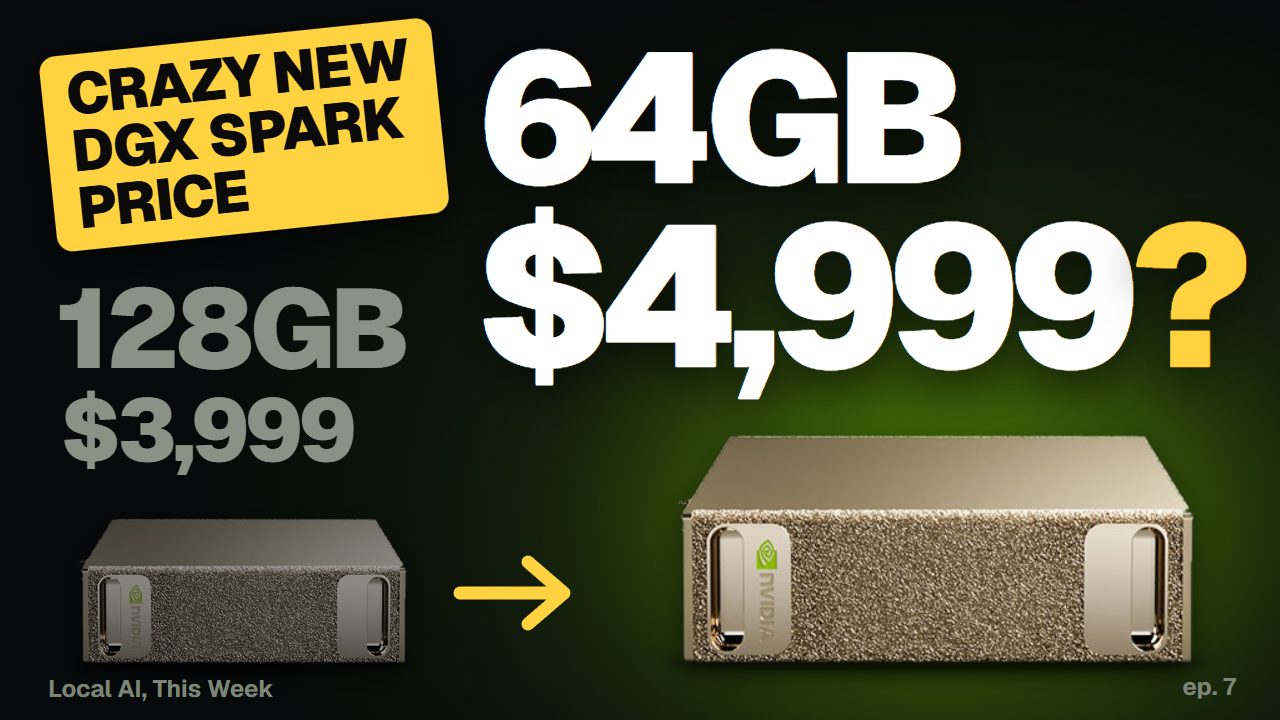
NVIDIA announced a DGX Spark with 64GB of memory, half of what the original has, and it costs more than the full one did at launch. The price is the part that stood out to me, and I could not find how NVIDIA measured the gain it claims from linking two or four together.
 Plays here, from YouTube
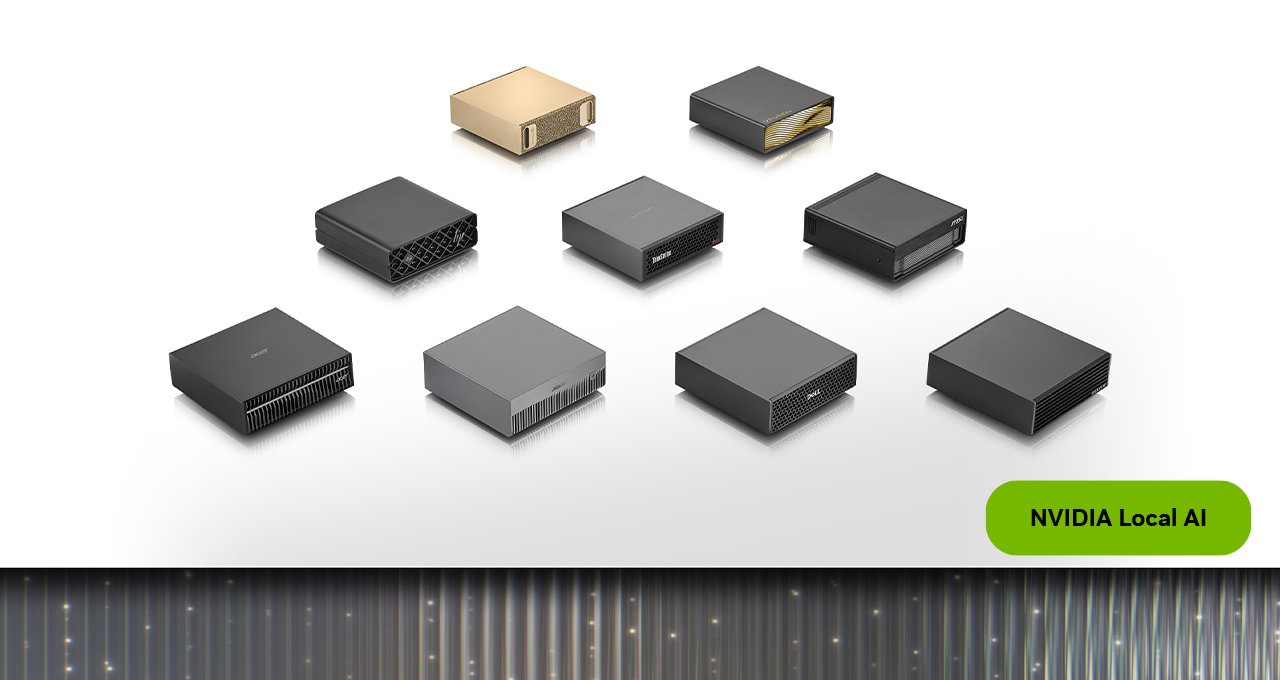
On Friday 2 October, NVIDIA announced a DGX Spark with 64GB of memory, half of what the original has. NVIDIA said it would go on sale on Friday 23 October, starting at $4,999. It only comes from six partners: Acer, ASUS, Dell, Gigabyte, HP and MSI. Tom's Hardware reports the same GB10 chip and the same 273 GB/s of memory bandwidth.
The price
The price is the part that stood out to me. When the original went on sale on 15 October 2025, NVIDIA's price for 128GB was $3,999. NVIDIA raised that to $4,699 on 23 February 2026 and blamed memory supply. Tom's Hardware put a 128GB box at $7,000 to $9,000, if you could find one.
So the new one costs more than the full one did at launch, and by my own maths 2.50 times as much per gigabyte ($78.11 against $31.24).
| DGX Spark | Memory | Price | Per gigabyte |
|---|---|---|---|
| The original at launch, 15 October 2025 | 128GB | $3,999 | $31.24 |
| The new version, from 23 October 2026 | 64GB | from $4,999 | $78.11 |
The prices are NVIDIA's, from its announcement and its forum. The per gigabyte figures are my own maths.
What will 64GB run?
NVIDIA says the 64GB box supports models of up to 100 billion parameters, and the model it has chosen to show it off is Qwen 3.8 27B. Artificial Analysis had that one at 34 on its intelligence index on 2 October. GLM 5.3 Flash, which my own four Sparks run, was at 42, and in NVIDIA's own table it sits in the column for four boxes.
NVIDIA's answer is that you can link two together later. Its table says two give 1.7 times the performance of one and four give 3.1 times, so by NVIDIA's numbers going from two boxes to four nearly doubles it again (3.1 divided by 1.7 is 1.82, by my own maths). I could not find how that was measured.
When I went from two Sparks to four, my own writing speed for a single user only went up 1.46 times (46.9 to 68.5 tokens a second). The developer of one Spark engine measured that same Qwen model at 75 tokens a second on one 128GB box, 85 on two and 125 on four, which is 1.13 and 1.67 times by my own maths. If NVIDIA is counting several users at once, its figure is more believable, because when I measured four requests together on my cluster they produced 2.13 times the total of one (65.2 tokens a second against 30.6).
A correction
In episode 5 I said NVIDIA had reportedly stopped making the original Spark. NVIDIA answered that on its own forum on 1 October, and says more of them are in production.
A few caveats
- On 3 October there were no independent numbers for the 64GB version, and I had not seen a UK price.
- The memory is fixed to the board, so you cannot add to it later.
- $4,999 is only the starting price, and Tom's Hardware says it may not last long.
Read more
- NVIDIA's announcement of the 64GB DGX Sparkblogs.nvidia.com
- NVIDIA's DGX Spark product pagenvidia.com
- NVIDIA's forum post on the February price riseforums.developer.nvidia.com
- Tom's Hardware on the 64GB DGX Spark and what a 128GB box coststomshardware.com
- Artificial Analysis, open-weights leaderboardartificialanalysis.ai
- A Spark engine developer's forum post with Qwen 3.8 27B speeds on one, two and four boxesforums.developer.nvidia.com
- The NVIDIA forum thread with its reply about making the original Sparkforums.developer.nvidia.com
The numbers in this story
| Figure | What it is | From | Kind |
|---|---|---|---|
| $4,999, from 23 October 2026 | The 64GB DGX Spark's on-sale date and starting price | blogs.nvidia.com | NVIDIA's claim |
| $7,000 to $9,000 | What a 128GB box costs, if you can find one | tomshardware.com | reported |
| 2.50 times | Price per gigabyte, the 64GB version against the original at launch | $78.11 divided by $31.24 | my own maths |
| 34 | Qwen 3.8 27B on Artificial Analysis's intelligence index | artificialanalysis.ai | Artificial Analysis's score |
| 1.7 and 3.1 times | Two linked boxes and four, against one, in NVIDIA's table | blogs.nvidia.com | NVIDIA's claim |
| 46.9 to 68.5 tok/s, 1.46 times | My own writing speed for one user, from two Sparks to four | my own test | measured by me |
My Sparks would run a little faster than these figures. I cap their graphics chips at 2,200MHz, against about 2,400 uncapped, to cut their power use. When I tested the cap on one box in August, writing speed stayed within 1 per cent, reading was 2 to 4 per cent slower, and the chip's peak power fell from 55.5W to 43.3W.
If a number on this page is wrong, I would rather know. Tell me in the comments under the video and I will correct it here and pin the correction there. What has been corrected so far is on the corrections page.